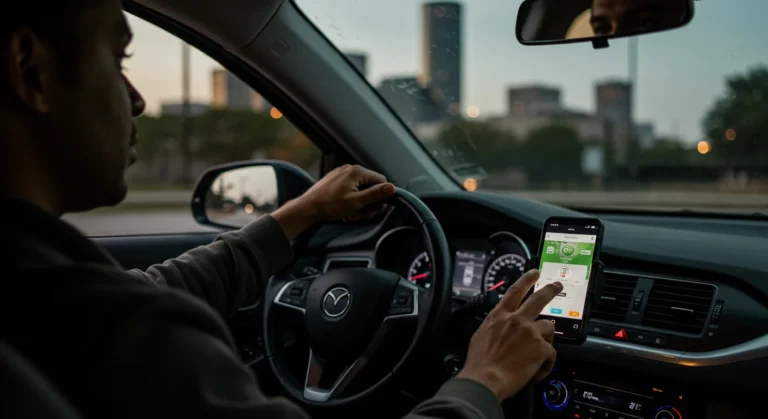
For any DoorDash driver in Portland, understanding the legal nuances surrounding adverse road conditions is essential, especially given Oregon’s unique legal framework. Recent developments in workers’ compensation and liability laws directly impact gig economy workers, raising critical questions about who bears responsibility when the weather turns dangerous?
Key Takeaways
- Oregon’s House Bill 4064, effective January 1, 2026, significantly clarifies the workers’ compensation eligibility for gig workers, including DoorDash drivers, injured during adverse road conditions.
- Drivers must immediately report any incident to DoorDash and seek medical attention, carefully documenting the accident scene, vehicle damage, and injuries with photos and witness statements.
- Under Oregon Revised Statutes (ORS) 656.027, “in the course and scope of employment” now specifically extends to gig workers while actively performing compensated delivery tasks, even if working as an independent contractor.
- Understanding the distinction between workers’ compensation claims and third-party liability lawsuits is important for maximizing recovery after an accident on Portland’s challenging roads.
Oregon House Bill 4064: A Landmark Shift for Gig Worker Protection
The field for gig economy workers in Oregon changed dramatically with the passage of House Bill 4064, which became effective on January 1, 2026. This legislative act directly addresses the long-standing ambiguities regarding workers’ compensation coverage for individuals operating as independent contractors within platforms like DoorDash. Previously, the classification of gig workers often left them in a precarious position, without the same protections afforded to traditional employees, particularly when facing injuries sustained due to external factors like adverse weather or poor road infrastructure.
HB 4064 amends several key sections of the Oregon Revised Statutes (ORS), particularly within Chapter 656, which governs workers’ compensation. The most significant change for a DoorDash driver in Portland is the expanded definition of “worker” and “employment” to explicitly include individuals performing services through online platforms for compensation, provided certain criteria are met. This means that if you are actively engaged in a delivery for DoorDash when an accident occurs because of road conditions, you are now more likely to be considered eligible for workers’ compensation benefits, covering medical expenses and lost wages.
The legislative intent behind HB 4064 was to provide a safety net for a growing segment of the workforce that often operates without traditional employment benefits. Lawmakers recognized the inherent risks associated with driving for a living, especially in a city like Portland, known for its diverse and sometimes challenging weather patterns. This bill represents a proactive step by Oregon to ensure that economic innovation does not come at the expense of worker safety and financial security. It’s a significant win for drivers, but understanding the specifics of its application is paramount.
Defining “In the Course and Scope of Employment” for Gig Drivers
One of the persistent challenges in gig worker injury claims has been establishing that the injury occurred “in the course and scope of employment.” For traditional employees, this is often straightforward: if you’re injured at your workplace during work hours, you’re covered. For a DoorDash driver in Portland, the “workplace” is the road, and “work hours” are often flexible and self-determined. HB 4064, by amending ORS 656.027, provides much-needed clarity.
Under the new provisions, a gig worker is considered to be in the course and scope of employment when they are actively logged into the platform and performing tasks for which they are compensated. This includes picking up orders, driving to the customer’s location, and dropping off deliveries. Importantly, it extends to the periods between these tasks if the driver is logged in and awaiting new assignments, provided they are within their designated service area. This is a critical distinction, as previous interpretations sometimes excluded the time spent “offline” or waiting for orders, leaving drivers vulnerable.
Consider a scenario: a DoorDash driver accepts an order in the Pearl District, navigates a sudden downpour on NW 23rd Avenue, hits a hidden pothole exacerbated by heavy rain, and sustains a back injury. Under the pre-2026 rules, the argument could have been made that the driver was an independent contractor and not “employed” in the traditional sense. Post-HB 4064, as long as that driver was actively performing or awaiting a compensated task while logged into the DoorDash app, their injury would likely fall within the scope of employment for workers’ compensation purposes. The specific language of ORS 656.027 now emphasizes the “economic reality” of the relationship, focusing on the service provided for compensation rather than the traditional employer-employee contract.
Working through Adverse Road Conditions: Driver Responsibilities and Documentation
While HB 4064 significantly expands protections, a DoorDash driver in Portland still holds responsibilities, especially when facing adverse road conditions. The law does not absolve drivers of the duty to operate their vehicles safely and prudently. However, if an accident occurs due to factors largely beyond a driver’s control, such as black ice on I-5 near the Fremont Bridge, sudden heavy fog on Highway 26, or severe flooding in Southeast Portland, the new legislation aims to provide a pathway for recovery.
Immediate Actions Post-Incident:
- Ensure Safety: First, move your vehicle to a safe location if possible, and check for injuries to yourself and others.
- Report to DoorDash: Immediately report the incident through the DoorDash driver app or by contacting their support line. Document the time, date, and details of this report.
- Contact Law Enforcement: If there are significant injuries, property damage, or if required by law (e.g., ORS 811.700 for accidents involving injury or significant damage), contact the Portland Police Bureau or Oregon State Police. Obtain a copy of the police report.
Important Documentation for Your Claim:
- Photographs and Videos: Document everything. Take clear photos and videos of the accident scene, including vehicle damage, road conditions (potholes, ice, standing water, debris), traffic signs, and any relevant surroundings. Get multiple angles.
- Witness Information: Obtain contact information from any witnesses who saw the accident or the contributing road conditions.
- Medical Records: Seek medical attention promptly, even for seemingly minor injuries. Adrenaline can mask pain. Keep careful records of all medical evaluations, treatments, prescriptions, and follow-up appointments.
- DoorDash App Records: Screenshot your active delivery status, order details, and any communication with DoorDash support regarding the incident. This proves you were “on the clock.”
- Personal Journal: Maintain a detailed journal of your symptoms, pain levels, limitations, and any lost income due to the injury.
Failing to document adequately can severely jeopardize your claim, even with the new protections. The burden of proof still rests on the injured party to demonstrate the incident occurred and resulted in injury while performing their duties.
Distinguishing Workers’ Compensation from Third-Party Liability Claims
For a DoorDash driver in Portland injured due to adverse road conditions, it’s vital to understand the two primary avenues for seeking compensation: workers’ compensation and third-party liability claims. These are not mutually exclusive and often run concurrently, though they address different aspects of your losses.
Workers’ Compensation Claims:
Under Oregon’s HB 4064, if you meet the criteria for being “in the course and scope of employment,” workers’ compensation will cover your medical expenses, a portion of your lost wages, and potentially permanent disability benefits. This is a “no-fault” system, meaning you don’t have to prove DoorDash was negligent. You only need to prove the injury occurred while working. However, workers’ compensation typically does not cover pain and suffering or full wage replacement.
Third-Party Liability Claims:
This is where the concept of negligence comes into play. If the adverse road condition was caused or exacerbated by the negligence of another party, you might have a third-party claim. Examples include:
- Another Driver: If another vehicle’s negligent driving (e.g., speeding in icy conditions) directly caused your accident, you can file a claim against their auto insurance.
- Government Entity: If a municipality (like the City of Portland) or a state agency (like the Oregon Department of Transportation, ODOT) failed to maintain roads properly, leading to a dangerous condition (e.g., an unmarked giant pothole, unrepaired bridge expansion joint, or inadequate drainage causing flooding), they could be held liable. However, suing government entities often involves specific notice requirements and shorter statutes of limitations, as outlined in the Oregon Tort Claims Act (ORS 30.260 to 30.300).
- Construction Company: If a construction zone was poorly managed, leaving debris or unsafe surfaces, and this caused your accident, the responsible construction company could be liable.
A third-party claim allows you to seek compensation for a broader range of damages, including medical bills, lost wages (often full compensation), pain and suffering, emotional distress, and even punitive damages in rare cases of extreme negligence. It’s important to note that any recovery from a third-party claim might be subject to a workers’ compensation lien, meaning the workers’ comp insurer may seek reimbursement for benefits paid out. Working through these overlapping claims requires careful legal strategy.
The Role of Legal Counsel in Portland Claims
After an accident as a DoorDash driver in Portland, especially one involving complex factors like adverse road conditions and the new gig worker laws, obtaining experienced legal counsel is not merely advisable. It is often essential. An attorney specializing in personal injury and workers’ compensation can provide invaluable guidance through this intricate process.
A lawyer can help you:
- Understand Your Rights: Interpret the nuances of HB 4064 and other relevant statutes like ORS 656.027 to ensure your claim is properly filed and categorized.
- Gather Evidence: Assist in collecting and preserving critical evidence, including police reports, medical records, witness statements, and expert testimony regarding road conditions or vehicle damage.
- Negotiate with Insurers: Insurance companies, whether workers’ compensation or auto liability, are often focused on minimizing payouts. A lawyer can negotiate on your behalf to ensure you receive fair compensation for all your damages.
- Identify All Liable Parties: Beyond DoorDash, an attorney can investigate whether a third party (another driver, a city agency, a construction company) bears responsibility, opening up additional avenues for recovery.
- Navigate Deadlines: Strict statutes of limitations apply to both workers’ compensation claims and personal injury lawsuits. Missing these deadlines can permanently bar your claim. For instance, workers’ compensation claims typically have a 90-day notice period for the employer, though the final claim must be filed within one year of the injury, as per ORS 656.265. Tort claims against government entities often have even shorter notice periods, sometimes as little as 180 days, under ORS 30.275.
- Represent You in Court: If negotiations fail, your attorney can represent you in hearings with the Workers’ Compensation Board or in civil court.
The complexities of proving negligence, especially against governmental entities concerning road maintenance, require a deep understanding of engineering standards, weather data, and public records requests. An attorney often works with accident reconstructionists, medical professionals, and other experts to build a compelling case. Don’t underestimate the challenge of going up against large corporations or government bodies on your own. Their legal teams are well-resourced. Securing legal representation can level the playing field and significantly improve your chances of a successful outcome.
For a DoorDash driver working through Portland’s streets, understanding the legal framework surrounding adverse road conditions is no longer a luxury but a necessity. The passage of HB 4064 marks a key moment, offering gig workers protections previously out of reach. By carefully documenting incidents, understanding your rights under workers’ compensation and third-party liability, and seeking timely legal counsel, you can protect your livelihood and health when the unexpected happens on the road.
Does Oregon’s HB 4064 cover all DoorDash drivers for workers’ compensation?
HB 4064, effective January 1, 2026, extends workers’ compensation eligibility to DoorDash drivers and other gig workers in Oregon, provided they are actively logged into the platform and performing or awaiting compensated tasks when an injury occurs. It’s not automatic for every moment a driver is “on call,” but specifically for tasks and immediate waiting periods.
What is the most important thing a DoorDash driver should do immediately after an accident due to road conditions in Portland?
Immediately after ensuring personal safety, the most important step is to document everything thoroughly: take extensive photographs and videos of the accident scene, vehicle damage, and the specific adverse road conditions (e.g., pothole, ice). Also, report the incident to DoorDash and seek prompt medical attention, keeping all medical records.
Can I sue the City of Portland if bad road maintenance caused my accident while I was DoorDashing?
Yes, you might be able to sue the City of Portland or other government entities if their negligence in road maintenance directly caused your accident. However, claims against government bodies fall under the Oregon Tort Claims Act (ORS 30.260 to 30.300) and have strict, often shorter, notice requirements that must be met precisely.
How does workers’ compensation differ from a personal injury lawsuit for a DoorDash driver?
Workers’ compensation, now more accessible to DoorDash drivers under HB 4064, is a no-fault system that covers medical bills and lost wages without proving negligence. A personal injury lawsuit, or third-party liability claim, requires proving another party’s negligence caused the accident and can cover a broader range of damages, including pain and suffering, beyond what workers’ compensation provides.
What specific Oregon law addresses the “course and scope of employment” for gig workers?
Oregon Revised Statutes (ORS) 656.027, as amended by House Bill 4064 (effective January 1, 2026), specifically clarifies and expands the definition of “in the course and scope of employment” to include gig workers, such as DoorDash drivers, when they are actively performing or awaiting compensated tasks through an online platform.